JASON HALF : writer
  • Home
  • Full-length Plays
    • The Community Play
    • Kate and Comet
    • Sundial
    • Tulip Brothers
  • Short Plays
    • Among the Oats
    • Holly and Mr. Ivy
    • Locked Room Misery
  • Screenplays
    • The Ballad of Faith Divine
    • My Advice
    • Finders
  • Fiction
  • Blog

Book Review: ETON CROP (1999) by Bill James

12/15/2024

0 Comments

 
Picture
With the focus on an intriguing new character and a new and competitive drug dealing locale, Eton Crop becomes both a great standalone novel and one of the best stories to date in Bill James’s Harpur and Iles series. The character is young undercover agent-in-training Naomi Anstruther, and the location is an amusingly kitschy floating restaurant named The Eton Boating Song. The setup is simple but the narrative winds and weaves in satisfying and unpredictable ways. Two local Eton dealers have been killed by London players looking to expand; their corner table with its signaling glass of rum and black is now vacant. Anstruther is tasked to align herself with Mansel Shale’s group and become the next Eton dealer. This time, Detective Chief Superintendent Colin Harpur will be in the restaurant, ready with his undercover men to catch the out-of-town assassins.

But those who have delighted in James’s hilarious, brutal, and surprising series – Eton Crop is the sixteenth entry – should know that events are not guaranteed to go as planned and can often turn to nightmare for cops and criminals alike. What is fascinating here is that the obvious hook that would surely generate suspense for any other crime fiction writer – i.e., Will the undercover agent be discovered by the gang she infiltrates? – is subverted at the outset. Shale knows full well that Anstruther is a plant (his intel is just as good as Harpur’s) but stands to benefit from the charade, so he proceeds carefully.

With this excellent book, the author continues to add to a cumulative, serial narrative that gives characters a chance to speak, act, and reveal their personalities in fascinating and contradictory ways. “Panicking” Ralph Ember has survived much intermittent peril. Ralphy is a vain bar owner who has formed an uneasy alliance with the other local kingpin, Manse Shale, since both are threatened by the London forces trying to take over the drug trade in James’s always unnamed city. Art dealer and informant Jack Lamb provides Harpur, and only Harpur, with useful intel while wearing era-appropriate costumes whenever they have their midnight meetings at deserted WWII battlements. Even Ember and Shale’s junior partners in crime, Beau Derek and Alfie Ivis respectively, are wonderfully drawn creations, each with their own strengths, weaknesses, and rhythms of speech.

And as for Naomi, Bill James shows how adept, and how unique, he is at shaping characterization and psychological terrain. Over just two chapters (Ch. 4 and 5), the reader meets this woman and learns everything relevant about her through the character’s actions, words, and internal thoughts. In a way, it’s a minimalist portrait, as we follow her vacation with her boyfriend to Torremolinos, the friction that ensues while there from her commitment to go undercover – he rightly argues that, once undertaken, his relationship with “Naomi” will dissolve and “Angela Rivers” will be an unreachable stranger to him – and her only-live-once fling with a vacationing Welshman named Lyndon during the return flight to England. It’s a wonderful introduction, alternately letting us empathize and judge the young officer’s choices and her admirable but perhaps misplaced devotion to duty.

Picture
The paragraphs above, which praise plot and character, don’t adequately capture just how enjoyable Bill James’s books are, and how teeming they are with life, insights, wit, and vivid turns of phrase. The crime stories are written in almost a stylistic shorthand (which, depending on the character, can be quite verbose and circuitous) that readers become familiar with as they stay in this fictional world and learn the language and the customs of the denizens there. There are some stories that I feel could be approached by new readers as standalone entries, and Eton Crop is one of these: Naomi Anstruther provides the compelling anchor and keeps the kitschy restaurant afloat, right up to its unpredictable climax. 

0 Comments

Book Review: LOVELY MOVER (1998) by Bill James

1/28/2024

0 Comments

 
Picture
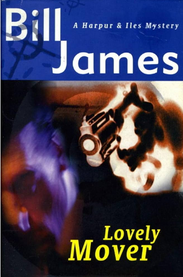
Although Lovely Mover gets its title from the London syndicate outsider who glides into Bill James’s unnamed English city and disrupts the criminals and dealers there, the author is very much focused on the familiar figures he has crafted and whom readers (through 15 books) have come to know well. James’s series earns much of its power through this effect of cumulative narrative, as each book picks up roughly where the last one left off, and tensions and grudges built up in an earlier tale are continued – and sometimes lethally concluded – in the current one.

Another Jamesian practice is at play: Lovely Mover begins and ends with a murder, which is not uncommon for stories taking place on Detective Sergeant Colin Harpur’s patch. The initial victim is Eleri ap Vaughan, a drug dispenser to the socialite set and one of Keith Vine’s most successful dealers. It is Vine himself who decides she must be eliminated for the sin of entertaining a bid from a more lucrative London house. Her death, Vine reasons, will keep out the foreign suppliers trying to gain ground while sending a clear message to any within his stable who may be longing to stray. Meanwhile, rival rising kingpin Ralph Ember must contend with a mutiny among his business partners, and the resolution of that conflict ratchets up tensions between Ralph and his own supplier. Harpur himself is still undercover as a crooked cop on Vine’s payroll, but the risks of continuing are quickly outpacing any judicial rewards.

As I wrote in a previous review, there are some entries in the Harpur & Iles series that operate very well as standalone tales. Lovely Mover, on the other hand, feels like an insider piece, and its readers certainly benefit from drawing on the psychologies and drives of these criminals as James has painted them over the books and years. The narrative does have standalone shape – certainly there is a beginning with complications and escalations that build to the irreversible actions found in the conclusion – but there are better places for casual readers to start.
Picture
Which is not to say Lovely Mover doesn’t deliver lots of familiar pleasures: most characters have a wonderfully witty and blinkered way of thinking and scheming, and the aspirations and Achilles’ heels of many – Panicking Ralph’s vanity, for instance, or Keith Vine’s ambition and hubris – continue to fascinate and bring these figures to life (until someone else cuts that life short, at any rate). Newly added to the already colorful cast are a highly entertaining and irritating trio in the form of Ember’s drug supplier Barney, with his two “fifty-plus flotsam women” Maud and Camilla in tow. Their telephone banter is tortuous and hilarious, and indeed Bill James’s dialogue runs, no matter who is paired or what is discussed (or not spoken of), are always highlights that make his fiction quite sui generis.

The ap of Eleri ap Vaughan, we are told, means “child of” in Welsh, although it is more traditionally defined as “son of”. Keith Vine could be forgiven the imperfect translation, as he both admires and plans to kill the woman. “Eleri,” Vine hypothesizes through James’s writing, “probably meant a clear mountain stream or female peregrine falcon, something entirely lovely.” It is the presence of the Lovely Mover who has everyone agitated here, and pushes many of them to do some very unlovely things.
0 Comments

Book Review: PANICKING RALPH (1997) by Bill James

8/19/2023

0 Comments

 
Picture
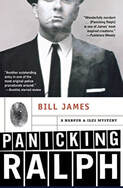
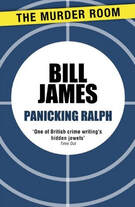
In many ways, it's Business As Usual for the characters, readers, and author of Panicking Ralph, the 14th entry in Bill James's lively crime series. This is generally good news, since these books featuring DS Colin Harpur and his boss ACC Desmond Iles -- with an expansive, colorful cast of aspiring villains and restless relations -- are always good and sometimes brilliant. If this installment is more good than great it is still worth reading, especially as it continues to craft and shake the Harpur & Iles universe built up so carefully by the author in those preceding tales.

First, a confession. While the character of Ralph Ember is as carefully and convincingly drawn as any person in James's fiction -- and while the author clearly finds "Panicking" Ralph's personal and psychological contradictions appealing -- I have always felt that a little Ember goes a long way. For me, Ralph is better cast in a peripheral role, perhaps as team player to a bank robbery or a bit of criminal cover-up; when the story places him front and center, as this one does, his unique blend of chivalry and selfishness can become tiring.

At the character's heart is a paradox that is superficially intriguing: he sees himself as a noble, admirable figure who happens to engage in murder, adultery, and drug running. Nearly all of Bill James's criminals are socially conscious and aspire to the realm of wealth and respectability, but Ralph (never Ralphy) Ember already has a version of both and knows he is above the rabble that occasionally frequent The Monty, his brass-and-burnished-wood bar that once attracted Real Names.

We see this pride and hubris when he serves up glasses of Armagnac to Keith Vine and Stan Stansfield, Ember's rivals in the shifting drug trade as both teams try to capitalize on the seller's market void created by the death of the last kingpin. And we see the battle between chivalry and self-preservation as he tries to decide whether to avenge his mistress's murder. She was gunned down out at the mudflats following a tryst with Ember; surely the men were after him and not her, yes? To act or not to act, even if acting brings on that psychological freezing that has unfairly earned Ralph his derisive nickname... Prince Hamlet is referenced a few times, and it's intriguing to consider the level of narcissism built into both characters.

For me, we spend a little too much time with our Hamlet here, although we do get to know him and his thought processes very well indeed. When Panicking Ralph switches to its second story, the ground is fresher and the endgame and outcome a little more uncertain. DS Harpur makes the rather surprising (and not wholly believable) move to secretly go undercover as a bent copper, insinuating himself in Vine and Stansfield's operation so he can gather evidence against them. In doing so, Harpur (and the author) must by necessity play a long game. The move means the detective is perfectly situated to illustrate James's series-arching theme: that the line between law abider and law breaker is (and will always be) perilously thin, especially with so many easy enticements awaiting one on the criminal side.

Harpur's choice to go heroic-rogue -- he chooses not to tell Iles and Chief Constable Mark Lane about his plan, likely because both would object to it -- allows the opportunity to see those women around him in a newer, stronger light. His college student girlfriend Denise is remarkably intuitive and resilient, and her sharply observed dialogue with Harpur throughout the book, always trying to get him to say more than his policeman's instinct will allow, is a highlight. Harpur's daughters Jill and Hazel continue to find their own voices (often at the hectored expense of their father), and even deceased wife and mother Megan Harpur (see the magnificent Roses, Roses) casts a strong presence through a bookshelf Colin has never gotten around to clearing, though not from family sentiment. Says Jill, assessing her dead mother's collection:

"There's a good boxing book, The Sweet Science, I want kept, and The Orton Diaries, of course. The rest, Oxfam or torched."
Picture
One of the most intriguing ideas presented in the pages of Panicking Ralph is a theoretical one. Mark Lane wants to infiltrate and break up the drug captains before the trade can solidify again; Desmond Iles would rather form an alliance with those in charge, promising to look the other way unless things get truly out of hand.

Iles's view is partly a matter of the Devil you know, but there is something more pernicious -- and pragmatic -- lying underneath. Just as Nature abhors a vacuum, Harpur and Iles's unnamed city will never be truly drug-free, no matter how many kingpins are locked up or how many coppers walk the neighborhoods. There is a demand for product, and there always will be. Smaller pushers from more diffuse networks will find their way in, just as Stanfield, Vine, and Ember are doing now. Given that inevitability, there is logic in Iles's push to partner with the criminals and to keep them in charge of operations, for the Devil you know is perhaps containable, amenable in a way that benefits all involved.


Panicking Ralph is a solid mid-series entry, although its characters and themes are best appreciated in context of the other books. Ralph Ember may have his paralyzing doubts, but Bill James is as sure-footed as ever.

0 Comments

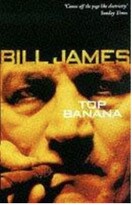
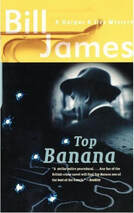
Book Review: TOP BANANA (1996) by Bill James

6/10/2023

0 Comments

 
Picture
Another solid entry in a cumulatively excellent series, Top Banana finds Bill James’s cops and criminals on familiar ground: a war between rival drug gangs has left a few fresh bodies in the streets, and with such events DCS Colin Harpur and his boss, ACC Desmond Iles, shed few tears over dealers nihilistic enough to obliterate each other. This time, though, a 13-year-old girl named Mandy Walsh was caught in the public crossfire, and her death adds to the worries of already distressed Chief Constable Mark Lane. But Mandy was a drug runner herself, a tough teen who preferred the street name “NOON”, and her killing may have been deliberate and not accidental.

Through this murk, local kingpin Mansell Shale sees an opportunity to reach a sort of symbiotic relationship with the police, mainly by offering to stop the street feuds and maintain peace if law enforcement looks the other way on – and essentially protects – his drug business. For a moment, the pragmatic Iles considers such a pact with the enemy (as morality and even law are flexible concepts anyway, able to be shaped to meet the needs of the moment) while Mark Lane refuses to capitulate. Instead, the nervous but proud Chief Constable wants an officer to go deep undercover and infiltrate Shale’s business; it’s a plan that sickens and infuriates Iles, who feels the foolhardy step would only produce another dead copper. It doesn’t help that Lane’s top pick for the scheme, an enterprising drug-squad officer named W.P. Jantice, is rumored to be working both sides himself.

The usual joys of Bill James’s work are to be found here. Top Banana is a twisty but true-ringing crime story populated by ambitious, quirky characters familiar and new. Stalwart Jack Lamb, Harpur’s valuable informant, is once more in the mix, but this time makes a painful miscalculation when he tries to protect his own resource in Harpur. Shale’s own confidante, a calculatedly positive bloke named Alf Ivis, shows the author’s delightful skill at sketching an adept survivor circulating among the criminal classes: Alfie may be Manse Shale’s sympathizer and sounding board, but he knows perfectly how to modulate his words for maximum effect.

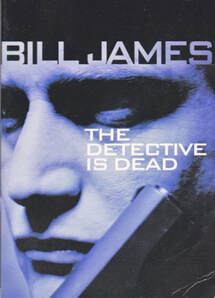
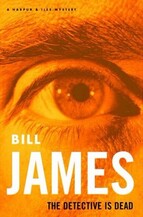
As in other stories, Harpur’s teen daughters manage to contend with their father’s criminal contacts (who occasionally show up at the house) by offering a fascinating mix of curiosity and sangfroid sarcasm. Meanwhile, Keith Vine and Stan Stansfield, two up-and-coming drug entrepreneurs whose hubristic characters are memorably explored in The Detective Is Dead (1995), remain on the periphery; James’s narrative promises that they will return to the center stage once more, vying for that powerful top spot in a dangerous trade where violent death is a vocational hazard.
​
Bill James’s darkly bruised humor appears throughout this Banana, surfacing even in the more prosaic moments, as with Colin Harpur’s observations on his boss’s flair for fashion:

The ACC looked ungenial in one of his superb single-breasted grey suits and a murkishly striped tie that would be some mighty London club’s: the kind of what-the-fuck-are-you-staring-at tie meant to cow the masses by tastelessness. He was still doing his hair en brosse following a late-night season of Jean Gabin films at one of the cinemas. He gave Harpur a kind of smile, an Iles kind, fat with insult.
Picture
And finally there is the thematic idea, working busily through all of the author’s crime novels, that a very fine (sometimes nonexistent) thread separates those who are expected to uphold the law and those who have decided to break it. This lack of moral delineation surely contributes to Chief Constable Lane’s deterioration, for he still wants to believe in a clear division between good and evil, between moral and amoral. For Iles and Harpur, who both know from long experience that such a line is both unrealistic and impractical, taking control of that division (and manipulating it for one’s own ends) is sometimes the most effective course forward in an unfair world. 

0 Comments
<<Previous

    BLOG

    Lots of book reviews and discussion of classic and contemporary mystery fiction. I welcome comments and continuing conversation.

    Subscribe below to receive updates!

    Subscribe

    Categories

    All
    19th Century Novels
    Andrew Garve
    Anne Morice
    Anthologies
    Anthony Boucher
    Appalachian Authors
    Bill James
    Book Review
    Catherine Dilts
    C. Daly King
    Craig Rice
    David Goodis
    E.C.R. Lorac / Carol Carnac
    Erle Stanley Gardner
    E.R. Punshon
    Freeman Wills Crofts
    French Authors
    George Bellairs
    George Milner
    Gladys Mitchell
    Golden Age Mystery
    Gregory McDonald
    Hardboiled Detectives
    Helen McCloy
    Helen Simpson
    Henry Wade
    Herbert Adams
    Hugh Austin
    James Corbett
    J. Jefferson Farjeon
    John Bude
    John Rhode/Miles Burton
    Leo Bruce
    Maj Sjowall / Per Wahloo
    Margery Allingham
    Martin Edwards
    Michael Gilbert
    Michael Innes
    Mignon G. Eberhart
    Milward Kennedy
    Mitchell Mystery Reading Group
    New Fiction
    New Mystery
    Nicholas Blake
    Nicolas Freeling
    Noir
    Philip MacDonald
    Play Review
    Q. Patrick / Patrick Quentin
    Rex Stout
    Richard Hull
    Ross MacDonald
    Russian Authors
    Science Fiction
    Vernon Loder
    Vladimir Nabokov
    William L. DeAndrea
    Winifred Blazey
    Writing

    Mystery Fiction Sites
    -- all recommended ! --
    Ahsweetmysteryblog
    The Art of Words
    Beneath the Stains of Time
    Bitter Tea and Mystery
    Catherine Dilts - author
    Countdown John's Christie Journal
    Classic Mysteries
    Clothes in Books
    ​A Crime is Afoot
    Crossexaminingcrime
    Gladys Mitchell Tribute
    Grandest Game in the World
    Happiness Is a Book
    In Search of the Classic Mystery Novel
    The Invisible Event
    Martin Edwards' Crime Writing Blog
    Murder at the Manse
    Mysteries Ahoy!
    Noirish
    The Passing Tramp
    Past Offences
    Pretty Sinister Books
    Tipping My Fedora
    To the Manor Born
    Witness to the Crime
    

    Archives

    August 2025
    December 2024
    November 2024
    September 2024
    May 2024
    April 2024
    January 2024
    August 2023
    June 2023
    May 2023
    April 2023
    March 2023
    February 2023
    January 2023
    December 2022
    November 2022
    August 2022
    July 2022
    June 2022
    May 2022
    April 2022
    February 2022
    January 2022
    December 2021
    November 2021
    October 2021
    September 2021
    August 2021
    July 2021
    June 2021
    May 2021
    April 2021
    March 2021
    February 2021
    January 2021
    December 2020
    November 2020
    October 2020
    September 2020
    August 2020
    July 2020
    June 2020
    May 2020
    April 2020
    March 2020
    February 2020
    January 2020
    December 2019
    November 2019
    October 2019
    September 2019
    August 2019
    July 2019
    June 2019
    May 2019
    April 2019
    March 2019
    February 2019
    January 2019
    December 2018
    November 2018
    October 2018
    September 2018
    August 2018
    July 2018
    June 2018
    May 2018
    April 2018
    March 2018
    February 2018
    January 2018
    December 2017
    October 2017
    September 2017
    August 2017
    July 2017
    June 2017
    April 2017
    March 2017
    February 2017
    January 2017
    December 2016
    November 2016
    October 2016
    September 2016
    August 2016
    July 2016
    June 2016
    May 2016
    April 2016
    March 2016
    February 2016
    January 2016
    November 2015
    October 2015
    July 2015
    June 2015

    RSS Feed

Unless otherwise stated, all text content on this site is
​copyright Jason Half, 2024.