JASON HALF : writer
  • Home
  • Full-length Plays
    • Kate and Comet
    • Sundial
    • Tulip Brothers
  • Short Plays
    • Among the Oats
    • Holly and Mr. Ivy
    • Locked Room Misery
  • Screenplays
    • The Ballad of Faith Divine
    • My Advice
    • Finders
  • Fiction
  • Blog

Book Review: ASTRIDE A GRAVE (1991) by Bill James

5/26/2022

0 Comments

 
Picture
The opening scene shows Detective Inspector Colin Harpur infiltrating his wife’s book club at their house. While considering evocative literary quotations, one member suggests Samuel Beckett’s famous line from Waiting for Godot, where Pozzo explains that women “give birth astride a grave, the light gleams an instant, then it’s night once more.” Harpur prefers a more effective quote, namely Dirty Harry Callahan’s invitation for a bank robber to reach for his weapon and “Make my day, punk.” The career detective defends his choice: “In four words it’s a line about constitutional treatment of the vile, about the absolute centrality of the law.” For readers who have spent time in author Bill James’s fascinating microcosm of cops and criminals, it is clear that the notions of law and morality are anything but absolute.

Astride a Grave is James’s eighth novel to feature Harpur and his dangerously perceptive boss, ACC Desmond Iles. I have been enjoying this surprising, gritty, and very funny police series immensely, but Grave is the first book that felt like it added up to less than the sum of its parts. James’s writing is as sharp and engaging as ever, and the book delivers the humor and psychological pressure-tests found in other tales. This time around, though, the story isn’t fashioned around a group of mismatched crooks coming together to rob a bank. The bank has already been robbed – in the previous entry Club – and Astride a Grave focuses on the aftermath of the robbery: those left standing (and the spouse of one victim caught in the crossfire) want their share, and not everyone agrees about the method and means of distribution.

It should be a fine, unique setting for a crime novel: thieves fall out as police tighten the net to find the robbers. Robbery leader Caring Oliver Leach has gone to ground but comes out of hiding to confront Panicking Ralph Ember, a partner with literal weak knees and a burdened conscience. In an early chapter, tensions mount, guns are grappled over, and Ralph dispatches his ex-boss and buries him in the woods. But the complications are just beginning for Panicking Ralph, who must also contend with Caring’s wife Patsy – who becomes increasingly attracted to her husband’s incidental murderer, with his scar and his Charlton Heston looks – and Anna Chitty, whose own husband was killed in the Exeter bank robbery. Harpur and Iles continue to pay visits to Ralph’s bar The Monty, hoping to shake the already unsteady owner off balance. The scrutiny only becomes more intense when Patsy’s daughter Lynette disappears; did she run away or is she being held as leverage by someone who wants their share of the loot?

And yet, I found something derivative about this installment, as if characters, situations, and standoffs had been presented before. And indeed they had been, in other stories and with different permutations. Panicking Ralph has featured centrally in the last few books, and while his combination of twisted honor and psychological weakness are interesting to a point, his man-alone personality (and the author’s continuing interest to live inside this character’s neurotic head) makes him far less attractive to me than he is to Patsy Leach.
​
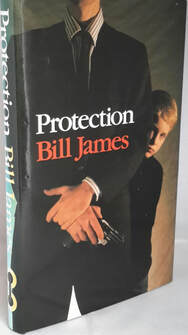
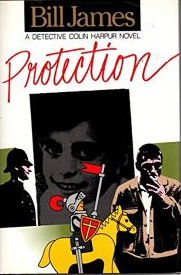
DI Harpur’s compulsive bed-hopping has also been explored in other installments; Harpur has been playing with fire by carrying on with the wife of a department sharpshooter, and now he makes a suspicious enemy of Iles by starting an affair with the Assistant Chief Commissioner’s wife, Sarah. Certainly, the behavior speaks volumes about Harpur’s need not for sex but for rule-breaking and living on a decidedly dangerous edge. Even a child’s disappearance and the subsequent search, used so brilliantly in Protection (1988) and The Lolita Man (1986), doesn’t feel quite so urgent or important here. 

Picture
None of these criticisms are to say that Astride a Grave is bad; it just suffers from comparison to the seven previous books in the series, ones in which James covers his ground with more originality. All of James’s books to date carry a healthy sense of nihilism, where any character could become moral or amoral – or be extinguished – as the wind blows and as the situation suits. The same fluidity courses through this story, where lovers embrace yards away from a freshly dug grave and law officials foster a growing disregard for any sort of civil or societal codes.

As with Beckett’s famous line, Bill James’s books seem to deliver a rather unpalatable paradox about life: at birth we are born racing to die, and in each person lies the potential for moral hypocrisy. It is precisely because we are racing toward our graves that we continually question whether society’s rules are really so inviolate as we believe. 

0 Comments

Book Review: CLUB (1991) by Bill James

11/25/2021

0 Comments

 
Picture
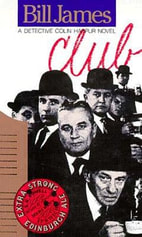
​Writing as Bill James, Welsh novelist James Tucker continues his incisive, morally murky, and darkly funny series featuring Detective Chief Superintendent Colin Harpur and the many scheming lawbreakers he interacts with, whether as crooks or colleagues. The books continue to build towards a fascinating cumulative effect: while the plot of each novel can stand on its own, the characters and conflicts carry over in serial fashion and past sins reverberate in new ways. This is especially true with Club, the seventh book, in which the author selects an interesting but incidental figure from past volumes and lets him writhe and wriggle in the unforgiving spotlight as a central character under pressure.
 
Ralph Ember runs the Monty, a pub with a dodgy reputation whose owner and clientele have both seen better days. Ralph is another of James’s upwardly mobile-looking petty criminals, a man who takes pride in his family and his once solid social reputation. His daughters attend an expensive school where Ralph campaigns (a little too personally) to keep Latin in the curriculum; in the pub, it’s no cheap beer for him when a sip of Armagnac will show the right touch of class. When Caring Oliver and Pete Chitty begin to put together a team for a bank job in Exeter, they reach out to Ralph because he’s a pro from the old days. But left unspoken is his reputation cemented from a job gone wrong years ago, where he was known thereafter as Panicking Ralphy.
 
Club is one of the series’ most visceral stories to date, not because it is overly violent or agonizing but because the author uses his third person prose to get inside and lay bare the psychosis of Ralph Ember, whose vulnerability and anxiety can produce outright claustrophobia in the reader. In James’s hands, the character is a completely believable straw man, working very hard to convince himself that he is still in complete control under pressure while his sweating limbs and shaking hands and lurking doubts scream otherwise. We spend the most time with Ralph in this book, very much inside his head, and it is company with an unlikable but completely believable flawed man, a graying dog who still tries to bark to show his status but doesn’t know if he’s fooling the rest of the pack or even himself.
 
Getting inside the mind of Sarah Iles, Club’s other truly troubled character, is even more unsettling. The Assistant Chief Constable’s wife is grieving the death of her lover Ian Aston, whose body is found on a trash heap near a pay phone. Aston may have been ambushed on his way to make a prearranged call to Sarah… and it’s possible that he may have been killed by her husband, pushed past the breaking point. With grief, uncertainty, and tension swirling within her – and the knowledge that the police would close ranks to protect their own – Sarah begins to break down and entertain very dark thoughts, with her hatred of life extending to her newborn baby girl.
 
What continues to amaze me about this crime series is how deftly and successfully Bill James explores his fictional world and the characters caught under the dome. As with Panicking Ralph Ember, the reader is given entrée into some of the cast’s perspectives, with the limited character views fully explored by the text. So we look at the situation through Ralphy’s eyes in his chapters, and know his every irritation and fear – and indeed his personality and belief system – through the third-person commentary. The same is true when a chapter focuses on Sarah Iles or Colin Harpur: we are in their world, feeling their emotions. (By contrast, the author never lets us share ACC Desmond Iles’s inner thoughts, and that’s a wise rule; neither reader nor colleague nor spouse knows what this potentially dangerous lawman is really thinking.) Crafting an interior point-of-view through prose is hardly a new literary tactic, but Bill James does it beautifully, and his characters are truly memorable and affecting because of this.
 
It’s also a marvel that so much wit and humor is infused into stories that often charge toward unhappy, painful conclusions and truths. I am amused by a turn of phrase or a wry description on every page and manage to laugh aloud from a detail or line of dialogue on every other. Consider this simple and sincere analysis through Ralph’s eyes as he makes an obligatory visit to case a bank:

Ralph Ember walked through the customer area of the bank at Exeter, trying to appear loaded and troublefree, and helped himself to a meaty handful of leaflets about special deposit account interest rates. His hands shook a little and he dropped a couple. They dived and carried like paper darts and he left them on the floor. He wanted no long scene here. If banks had any sense at all they would do sneak pictures of everybody who came in to collect investment brochures: no better way to get a nice view of the interior, and bank robbers’ cars and houses were waist-deep in the things.
James’s dialogue is equally effective in building character and exposing artifice. At its best, it also carries a mischievous, higher-minded ring, a play of language and expression reminiscent of Tom Stoppard. In this run, Harpur and Iles joust with a reality-television producer who believes his crime reenactment program is altruistically noble:
Yare-Gosse declared: “With respect, may I remind you, Mr. Harpur, gentlemen, that our programme is called Where Is Truth? Our obligations are inescapable.”

“We have a maxim here: truth is what the jury says,” Harpur replied.

In the corridor afterwards, Iles snarled quietly, “Since when have you been up to epigrams, Harpur? You got that stuff about truth and the jury from me.”

“Well, it’s true, isn’t it?”

“True about truth? Are we moving into philosophy?”

“It’s a philosophical show he’s trying to put on, yes?”

“Oh, yes, he’s fucking dangerous all right. He believes he’s the people. All media do. Yet most of them are hardly even persons.” 
Picture
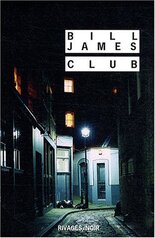
​As with the previous one-word book titles Protection (1988) and Take (1990), Club is loaded with multiple meanings. Ralphy thinks of his ailing bar as a club for the almost-respectable set, while the police fraternity forms a club that will look the other way when the lawbreaking is their own. The word is also used as act and weapon on Sarah Iles’s lover and will be used again on another character within the twisty story.

​Perhaps James rings the bell – or hits the reader over the head – a little too often with his chosen word, which appears more than two dozen times before this tale concludes. But it is a minor criticism; characterization, psychology, plotting, and wit are handled so winningly that a writer can be forgiven a bit of heavy symbolism. James must have enjoyed exploring the faults and fissures of his unsteady main character here: Panicking Ralph gets to headline his own story a decade down the road, when a 2001 series entry will bear his name.
0 Comments

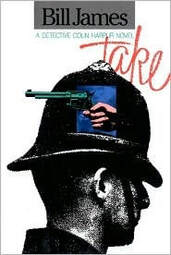
Book Review: TAKE (1990) by Bill James

10/25/2021

0 Comments

 
Picture
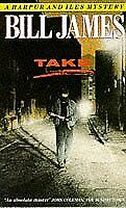
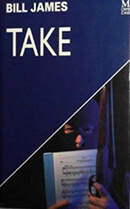
​Tristram Shandy and Annie Get Your Gun are both woven into the fabric of Take, Welsh author Bill James’ sixth crime story featuring detective Colin Harpur and his supervisor Desmond Iles. Shandy is the current subject of Harpur’s wife’s reading group, and the 18th century satire reminds Colin that life is full of absurdities and coincidences, often delivered ironically and out of order. A community theater production of the 1946 Irving Berlin musical Annie, meanwhile, finds Harpur’s daughters sharing the stage with Doris Preston, the wife of Ron “Planner” Preston, a cautious career crook who has his eye on a weekly wages delivery truck.
 
In Take, the reader spends more time with the criminals than the cops, and the choice is effective and illuminating: James sketches intriguing portraits of Planner and his gang, which includes Tyrone and Dean, two young bucks who are looking out for themselves; Mansel Billings, a self-described mother hen caring for his own bedridden mother; and Hoppy Short, a dim but available gun for hire. There is friction among the group as everyone waits – Planner’s daughter is attracted to Tyrone, for one thing – but Mansel tries to keep spirits up and Planner tries to keep control.
 
There are also two informants waiting for a payout, a canteen worker at the truck company and a desk policeman looking to open his own restaurant. There is a rumor that there may be more money in the van than usual, as a third driver has been assigned to the route. It’s also possible that the police already know of the plan, and no one wants to drive into an ambush, especially when snipers like Robert Cotton are on the force and at the ready.

Picture
​In her New York Times book review of the previous series entry, Come Clean, Marilyn Stasio writes that Bill James characterizes his criminals “in a mock-heroic style that confers dignity as well as absurdity on their aspirations for greatness.” It’s an observant description, and it fits the characters here as well. Except possibly for Hoppy, all are looking at the robbery as a way to find legitimacy and security. Planner wants to provide a comfortable, upwardly mobile life for his wife and daughter. Tyrone and Dean want this to be their first big score and a boost to their reputations. Mansel wants to give his mother care and quality that he can’t otherwise afford. Even Barry Leckwith, the cop informant on the inside, wants to use his share to become an independent entrepreneur.
 
As for the “mock-heroic” descriptor, I think that may be a little too dismissive. Almost always, the author makes his characters psychologically truthful; we might not agree with the choices made (of both the police and the criminal plotters) but we always understand the motivation and logic that brings them there. Planner and his gang aren’t being mocked; morality aside, their focus on their goal of stealing is just as competent and thorough as Harpur’s actions to sniff out and stop illegal activity. Each side has its networks, each side struts on the same stage, castmates destined to share the same sets and perform in a final drama together. 

Picture
​If the reader sides ultimately with the actors representing law and order, it is largely because the criminals are endangering innocent people with their acts. The men have guns, and they are not the cap pistols from the music hall. I mention this because Bill James also brilliantly examines the murky morals of Team Law & Order, filled with individuals (Harpur and Iles included, but also of informants like Leckwith) who are willing to keep the rule book conveniently closed if doing so will benefit them. In Take, the married Harpur’s ongoing affair with Ruth Cotton has cooled, as cuckolding a colleague and sharpshooter by sleeping with his wife might not be the best strategy.
 
Used throughout both as a verb and a noun, Take is another winning entry in an unusual and consistently engaging crime series. The story whips along, conflicts and complications are constant, and the dialogue and prose are always colorful and often bitingly funny. I appreciate James’ world-building, and his ongoing refusal to label anyone “hero” or “villain” but instead explore every character along the way and have them act truthfully, however flawed their thinking and ethics may be. No community theater director could ask for more.  

0 Comments

Book Review: COME CLEAN (1989) by Bill James

9/24/2021

0 Comments

 
Picture
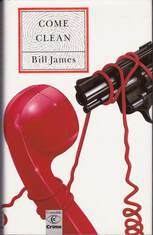
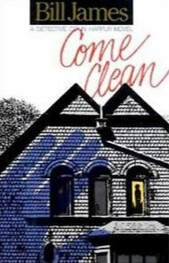
By Come Clean, the fifth book in Bill James’ exciting, observant crime series featuring Detective Chief Superintendent Colin Harpur, the thematic and stylistic elements are clearly defined and working effortlessly to tell the tale. As always, the author is keenly interested in exploring the relationships between those expected to uphold the law and those working hard to circumvent it. It’s a dance between copper and criminal, sometimes surprisingly convivial but always guarded and cautious. The crux is that the two groups need one another, both to provide a reason for being and also to keep informed about what each side is up to from sources where a little whisper in the right ear might pay dividends.
 
The organized criminal element in James’ unnamed city has been reduced to two rival gangs: Leo Tacette and his sons, and Benny Loxton and his faithful henchmen. (The personalities and fates of the other urban kingpins are vividly presented in the two prior entries, Halo Parade and Protection.) At start, Harpur and his supervisor, Assistant Chief Constable Desmond Iles, know that something dark is in the works, but are short on details. There are rumors that Loxton’s men may have silenced a potential informant in The Monty, Panicking Ralph’s pub. Among the customers in the wrong place at an inconvenient time are Sarah Iles, the ACC’s wife, and Ian Aston, her lover. Their bond is another pairing of law-abider and lawbreaker, both finding a thrill in their illicit and dangerous union. Benny Loxton learns of the witnesses and needs to take care of the situation, but must tread lightly to keep his plans moving forward.
 
Bill James is a master of complicating the picture and exploring the nuanced permutations as powers shift and alliances change within the cast of his two crime-propelled worlds. There is a fair amount of empathy generated for the status-seeking criminal leads, even as they plot violence and put the lives of others at risk. One reason is that, at least so far, all of the crooks James has chosen to spotlight are upwardly mobile at heart: they want the upper-class amenities, but most of all they want to be socially respected. The money may be dirty, but it still buys the expensive house in the suburbs. Here, Loxton’s wife ensures that they are seen in the right circles, attending charity functions and donating handsomely to feed the unfortunate in Africa. The irony is that the quest for respectability isn’t out of reach; in America, at any rate, once one achieves a certain income bracket, few people will question where the money came from or just how many people were abused and discarded in its collection. Being rich is justification enough.

Picture
Come Clean is the first book in the sequence to give the character of Sarah Iles a full-throated personality. She is an intriguing character of contradictions, a mix of pragmatic thinking and fanciful emotions that keeps her assessing her relationship with Ian while her physical attraction for him drives her actions.

It is also the first book that runs past the up-to-now concise length of 188 pages, and Come Clean’s pacing suffers slightly as a result. The dialogue exchanges and the sharply ruminative inner thoughts of the characters are as engaging as ever, but there are just too many of them, and a few scenes could have been summarized or omitted without losing any resonance, while also giving the story a sleeker trajectory. The novel is still highly readable, with a wonderful late-chapter climax that feels bracing and inevitable; the book just runs about 70 pages longer than necessary. And when an author delivers four slim and lean-muscled books in a series, a fifth, flabbier one that meanders more than the others is more noticeable in contrast.
 
But let me return to that amazing, amusing pas de deux between man and woman, cop and criminal, husband and wife, that Bill James orchestrates and explores in such fascinating detail. As an example, I share two paragraphs to provide Megan Harpur’s perspective. Harpur’s wife has very little stage time in Come Clean, but she too has analyzed her husband and has learned the dance:

Megan believed detective work should be like in the Sherlock Holmes pieces, all magnifying glasses and clever deductions from train timetables. And she believed, too, that there should be a great and obvious gulf fixed between what was legal and what was not.
 
So, she loathed the way Harpur worked, and referred to him occasionally as the sardonic rat of no-man’s land, apparently after some war poem she knew: almost everything could be reduced to literature if you had the reading. What she meant was that, to do his job, he lived and thrived in an undefined, dirty and perilous area between villainy and rectitude, constantly blurring the line separating what was right from what was necessary.

0 Comments
<<Previous
Forward>>

    BLOG

    Lots of book reviews and discussion of classic and contemporary mystery fiction. I welcome comments and continuing conversation.

    Subscribe below to receive updates!

    Subscribe

    Categories

    All
    19th Century Novels
    Andrew Garve
    Anne Morice
    Anthologies
    Anthony Boucher
    Appalachian Authors
    Bill James
    Book Review
    Catherine Dilts
    C. Daly King
    Craig Rice
    David Goodis
    E.C.R. Lorac / Carol Carnac
    Erle Stanley Gardner
    E.R. Punshon
    Freeman Wills Crofts
    French Authors
    George Bellairs
    George Milner
    Gladys Mitchell
    Golden Age Mystery
    Gregory McDonald
    Hardboiled Detectives
    Helen McCloy
    Helen Simpson
    Henry Wade
    Herbert Adams
    Hugh Austin
    James Corbett
    J. Jefferson Farjeon
    John Bude
    John Rhode/Miles Burton
    Leo Bruce
    Maj Sjowall / Per Wahloo
    Margery Allingham
    Martin Edwards
    Michael Gilbert
    Michael Innes
    Mignon G. Eberhart
    Milward Kennedy
    Mitchell Mystery Reading Group
    New Fiction
    New Mystery
    Nicholas Blake
    Nicolas Freeling
    Noir
    Philip MacDonald
    Play Review
    Q. Patrick / Patrick Quentin
    Rex Stout
    Richard Hull
    Ross MacDonald
    Russian Authors
    Science Fiction
    Vernon Loder
    Vladimir Nabokov
    William L. DeAndrea
    Winifred Blazey
    Writing

    Mystery Fiction Sites
    -- all recommended ! --
    Ahsweetmysteryblog
    The Art of Words
    Beneath the Stains of Time
    Bitter Tea and Mystery
    Catherine Dilts - author
    Countdown John's Christie Journal
    Classic Mysteries
    Clothes in Books
    ​A Crime is Afoot
    Crossexaminingcrime
    Gladys Mitchell Tribute
    Grandest Game in the World
    Happiness Is a Book
    In Search of the Classic Mystery Novel
    The Invisible Event
    Martin Edwards' Crime Writing Blog
    Murder at the Manse
    Mysteries Ahoy!
    Noirish
    The Passing Tramp
    Past Offences
    Pretty Sinister Books
    Tipping My Fedora
    To the Manor Born
    Witness to the Crime
    

    Archives

    August 2025
    December 2024
    November 2024
    September 2024
    May 2024
    April 2024
    January 2024
    August 2023
    June 2023
    May 2023
    April 2023
    March 2023
    February 2023
    January 2023
    December 2022
    November 2022
    August 2022
    July 2022
    June 2022
    May 2022
    April 2022
    February 2022
    January 2022
    December 2021
    November 2021
    October 2021
    September 2021
    August 2021
    July 2021
    June 2021
    May 2021
    April 2021
    March 2021
    February 2021
    January 2021
    December 2020
    November 2020
    October 2020
    September 2020
    August 2020
    July 2020
    June 2020
    May 2020
    April 2020
    March 2020
    February 2020
    January 2020
    December 2019
    November 2019
    October 2019
    September 2019
    August 2019
    July 2019
    June 2019
    May 2019
    April 2019
    March 2019
    February 2019
    January 2019
    December 2018
    November 2018
    October 2018
    September 2018
    August 2018
    July 2018
    June 2018
    May 2018
    April 2018
    March 2018
    February 2018
    January 2018
    December 2017
    October 2017
    September 2017
    August 2017
    July 2017
    June 2017
    April 2017
    March 2017
    February 2017
    January 2017
    December 2016
    November 2016
    October 2016
    September 2016
    August 2016
    July 2016
    June 2016
    May 2016
    April 2016
    March 2016
    February 2016
    January 2016
    November 2015
    October 2015
    July 2015
    June 2015

    RSS Feed

Unless otherwise stated, all text content on this site is
​copyright Jason Half, 2026.